

Rising construction costs have made project budgets harder to control than they used to be. Delays, labour pressure, material waste and extended time on site can all increase spend well beyond the original estimate. That is one of the main reasons modular buildings in the UK commercial projects are attracting more attention. They offer a more controlled route to new space, with shorter programmes, less disruption and greater certainty around delivery.
This matters particularly for organisations considering modular buildings for businesses, where speed, budget and practical use all need to align. From modular office buildings to customer-facing commercial units, modular construction is increasingly seen as a way to reduce project costs without compromising on quality, flexibility or long-term value.
However, those benefits depend on getting key decisions right early. This guide explores common mistakes that can increase costs and how modular construction delivers better cost control when planned correctly.
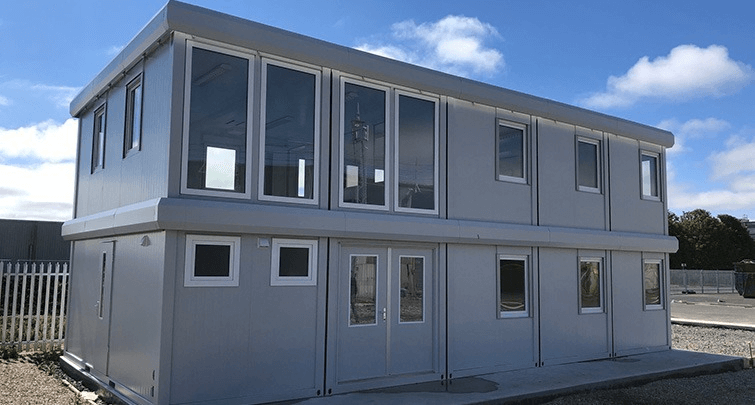
Mistake 1: Not Planning the Layout Properly
One of the most common mistakes in a container conversion is assuming the layout can be resolved later. A container may offer a fixed footprint from the outset, but that does not make planning less important. It makes it more important because, in a compact space, even small layout decisions can have a noticeable effect on how the unit operates day to day.
This becomes especially important in a container office conversion. A desk may fit neatly on a plan, but that does not guarantee the space will feel comfortable once storage, lighting and daily movement are taken into account. The same applies to retail and hospitality units, where poorly placed counters, awkward walkways or limited working space can quickly reduce functionality and lead to costly adjustments later.
Many of the long-term cost benefits of container conversion depend on getting this stage right early. Good container office design begins with practical use rather than appearance alone. When that planning is handled properly, the space feels natural and efficient. When it is not, rework and inefficiencies can increase project costs.
Mistake 2: Ignoring Insulation and Climate Control
Steel gives a container its strength. However, it does very little to make the interior comfortable on its own. That is why insulation and climate control need to be considered early, not as an afterthought.
A unit that feels too hot in summer or difficult to warm in colder months can quickly lose usability, especially in workspaces or customer-facing environments. Poor thermal performance often leads to higher running costs, retrofitting expenses and reduced long-term value.
The strongest commercial container conversions treat insulation as part of the foundation of the build. When ventilation, heating and internal finishes are planned properly from the start, the space performs efficiently and avoids unnecessary cost over time.
Mistake 3: Underestimating Structural Modifications
This is usually where the design begins to open up. Larger windows, glazed doors and linked units can transform how the space feels. Many of the most effective container conversion ideas take shape at this stage.
However, these changes affect more than appearance. A container’s structural strength depends on its original form, so every modification needs careful consideration. Poorly planned alterations can require additional reinforcement, increasing both time and cost.
The issue is not an ambitious design, but failing to plan structural changes properly. When handled early and correctly, the result is both visually effective and structurally sound without unnecessary expense.
Mistake 4: Poor Electrical and Plumbing Planning
The details that cause the most frustration are often the ones that are not immediately visible. Lighting, power, plumbing and service access have a direct impact on how well the space functions.
When these systems are planned too late, layouts often need to be adjusted around them. This can lead to inefficient use of space, additional labour and avoidable rework.
In modular office space, early planning ensures that services support the layout rather than restrict it. This helps maintain efficiency, reduce delays and avoid additional costs during installation.
Mistake 5: Choosing the Wrong Supplier
Choosing a supplier solely based on modular building costs can lead to problems later. While the initial price matters, it rarely reflects the full project cost, whether the requirement is for a portable cabin, modular office spaces or larger prefabricated buildings in UK commercial projects.
A commercial unit requires proper planning, technical understanding and coordination. Without this, mistakes in layout, insulation or installation can lead to delays and additional expense, limiting the modular construction benefits businesses expect, such as cost control and efficiency.
Experienced modular building providers in the UK help manage these risks early. They ensure that decisions are made correctly from the start, improving cost control, reducing delays and supporting a smoother delivery process across portable cabin setups, modular office spaces and other prefabricated building solutions.
How Strong Container Projects Take Shape
Careful planning is what makes a container conversion a worthwhile investment for most businesses. The question is not simply whether a container can be turned into an office, retail unit or hospitality space, but whether it will function well, feel comfortable and continue to support the business effectively over time. A well-planned conversion does not just create space; it creates the right space for the way the business operates.
Before moving ahead, it is important to work with experienced container conversion providers who can assess layout, structure, insulation and services from the outset. Early decisions play a direct role in how the unit performs, how comfortable it feels in daily use and how well it holds its value over time.
Halletts Spaces provides shipping container conversions that businesses in the UK can rely on, with solutions designed for practical commercial use. Get in touch to discuss the right approach for the project.


